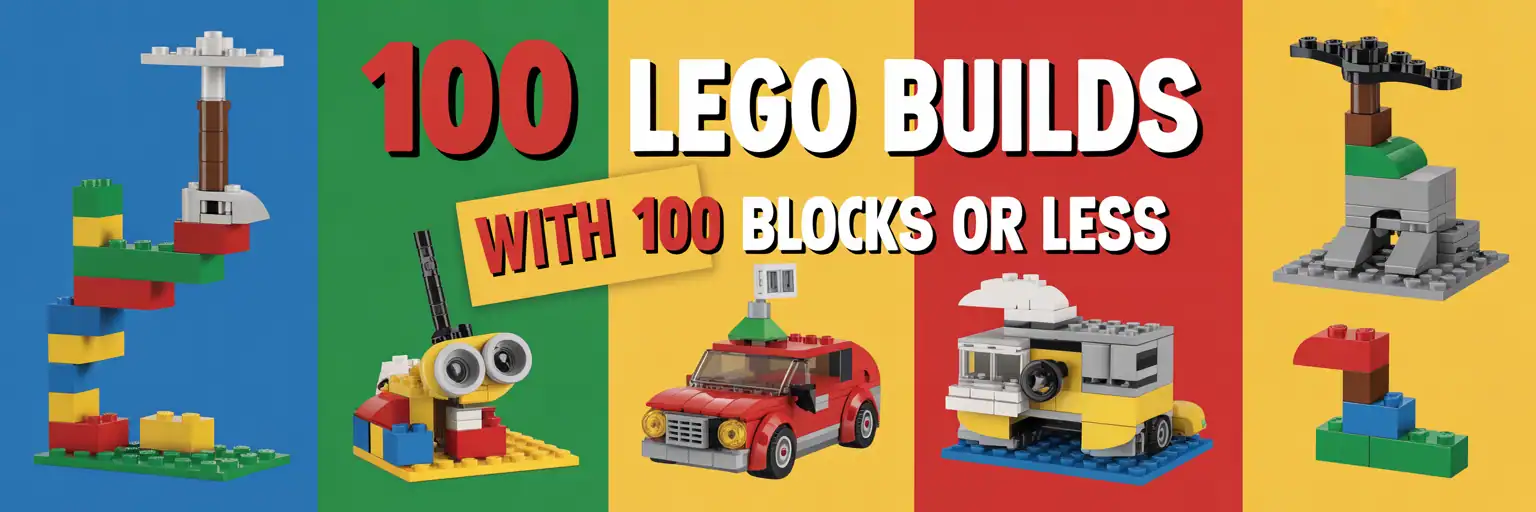
100 LEGO Builds With 100 Blocks or Less
Create small LEGO build ideas fast. Choose a category, style, color palette, difficulty level, and proof option. Then generate copy-ready prompts for simple brick builds, micro MOCs, classroom challenges, desk toys, gifts, and social posts.
This page is built for builders who want useful LEGO ideas without needing a huge brick collection. It focuses on compact projects, common parts, stable construction, and clear prompt output.
Your Copy-Ready LEGO Build Prompts
Click Generate to fill the boxes. Copy one level for a quick AI prompt, classroom handout, social post, or LEGO challenge.
Level 1: Quick Idea
Level 2: Builder Brief
Level 3: Detailed Prompt
Level 4: Social / Challenge Post
Support the project
These free tools take time to build and improve. Support helps keep the generators free and funds more LEGO, study, business, and creative tools.
100 LEGO Builds With 100 Blocks or Less: Small Brick Ideas That Are Easy to Start
Small LEGO builds are perfect when you want a creative project without sorting a full storage bin. A 100-piece LEGO build challenge gives you enough room for shape, color, and character, while still keeping the project simple.
This generator helps you create micro LEGO build ideas, simple brick projects, small MOC prompts, desk toy concepts, and classroom LEGO challenges. As a result, you can turn a few common bricks into a focused plan instead of staring at a pile of parts.
Search-focused topics covered: LEGO builds with 100 pieces or less, small LEGO MOC ideas, micro LEGO build prompts, easy LEGO projects for kids, simple brick builds for adults, LEGO classroom activities, LEGO desk toy ideas, and low-piece-count LEGO challenges.
Why 100-Piece LEGO Builds Work So Well
A 100-block limit creates a useful creative boundary. Instead of building a giant model, you must choose the most important shapes first.
That limit helps beginners because the build feels possible. It also helps advanced builders because every brick has to earn its place.
Small LEGO projects are also easier to display, rebuild, photograph, and share. Therefore, they work well for quick gifts, desk toys, family nights, homeschool activities, classroom STEM prompts, and LEGO club challenges.
How to Use This Small LEGO Build Generator
Start by choosing the build category. Vehicles, animals, architecture, food objects, and mini scenes all work well because they have clear shapes.
Next, choose a style and scale. For example, a chibi micro animal needs different parts than a realistic micro car or a tiny building facade.
Then choose a color palette, difficulty, proof style, and use case. The tool combines those choices into prompt levels you can copy into ChatGPT, Copilot, an image prompt workflow, or your own LEGO planning notes.
Choose a clear object with a simple silhouette, such as a car, dog, house, tree, rocket, robot, or mini shop.
Set the piece count before adding details. This keeps the build small and easier to finish.
Build the core shape first. Then add color, tiles, props, or a tiny base if parts remain.
Best Ideas for LEGO Builds With 100 Pieces or Less
The best low-piece LEGO builds have a strong outline. A tiny race car, mini camper, desk cactus, small dragon, bookshelf robot, micro train, little bakery, or pocket-sized castle can all read clearly with fewer than 100 pieces.
For kids, simple LEGO animal builds and small vehicle builds are often easiest. For adults, micro architecture, desk toys, and display vignettes offer a relaxing creative break.
For classrooms, a low-piece-count LEGO challenge can support planning, measurement, storytelling, engineering, and teamwork. Students can compare designs, explain part choices, and improve stability after testing.
Common Parts That Make Small LEGO Builds Better
Small builds work best with common pieces. Plates, tiles, slopes, jumper plates, brackets, hinges, clips, bars, and 1×1 detail elements create shape without using too many parts.
However, rare pieces should not control the design. If a special part is missing, swap it for a common brick shape and keep the silhouette clear.
For sturdy small MOCs, overlap seams and avoid long unsupported sections. A tiny build can still be strong when the base is layered, balanced, and connected with legal clutch points.
Using AI Prompts for Simple LEGO Build Planning
An AI prompt cannot replace real brick testing. Still, a clear prompt can help you plan the model before you start building.
Good LEGO prompts should include the subject, style, scale, piece limit, color palette, difficulty, and stability rules. They should also ask for sub-assemblies, part categories, and practical substitutions.
This generator creates those details in a structured format. That makes it easier to request a micro LEGO model plan, a parts lay-flat proof, a social challenge post, or a classroom build activity.
Small LEGO Builds for Classrooms, Clubs, and Family Activities
A 100-piece brick challenge is useful because it feels fair. Everyone gets the same limit, but each builder can solve the problem differently.
Teachers can use these prompts for STEM warmups, creative writing connections, design thinking lessons, or team-building activities. Parents can use them for quiet screen-free building time.
LEGO clubs can turn the same prompt into a friendly contest. For example, every builder can create a 60-piece animal, then vote on best silhouette, best color choice, strongest base, and funniest detail.
How to Finish a 100-Block LEGO Build
Begin with the core shape. Then add only the details that help someone recognize the build from across the table.
After that, test the model by lifting it, turning it, and setting it down. If pieces fall off, strengthen the base before adding more decoration.
Finally, photograph the finished model on a clean background. A simple photo makes small LEGO builds look better and helps you remember the design for later rebuilding.