Level 1 — Snapshot
Overview
Choose your options and press Generate Plans to see an at-a-glance
description of your LEGO 1933 Chevrolet Mercury build.

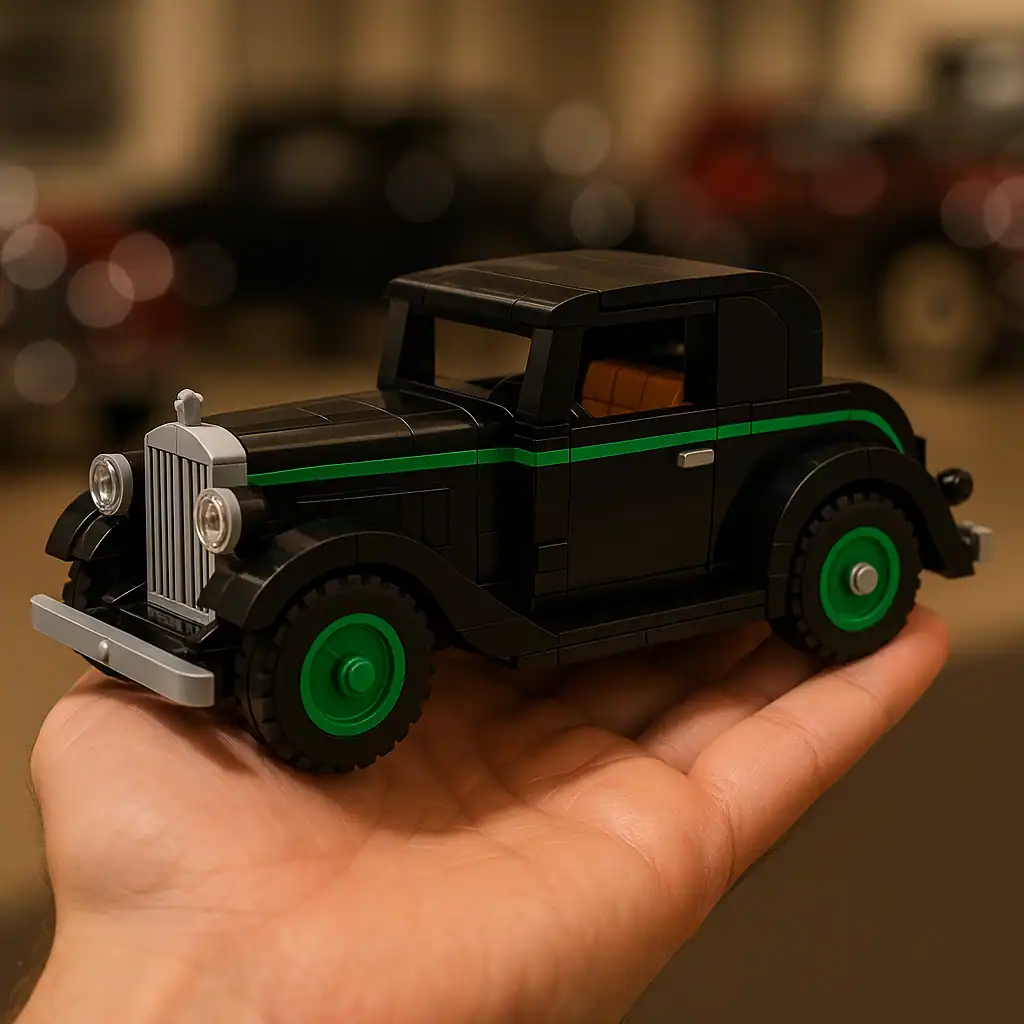
Generator for a museum-grade LEGO block clone of the 1933 Chevrolet Mercury (Standard Series CC) — Chevrolet’s budget “Standard Six” with 107" wheelbase, 181 cu in inline six and rare short-run body styles, tuned here for three scales, period colors and a detailed pre-war coupe interior. :contentReference[oaicite:0]{index=0}
Chevrolet reorganized its 1933 range into two lines: an upscale Master (initially sold as the Eagle) on a 110-inch wheelbase and a cheaper Standard on a 107-inch wheelbase. The Standard was first marketed as the Chevrolet Mercury and later as the Standard Six, positioned as an affordable alternative and advertised as the cheapest enclosed six-cylinder car on the market. :contentReference[oaicite:2]{index=2}
All Mercury/Standard models used a front-engine, rear-wheel-drive layout with bodywork by Fisher. Power came from a 181 cu in (2.97 L) valve-in-head inline six rated at about 60 hp, a shorter-stroke version of Chevrolet’s long-running “Stovebolt” six, paired with a three-speed manual gearbox. Standards weighed slightly less than their Master/Eagle counterparts and were priced roughly US$50–60 lower, an important distinction in Depression-era showrooms. :contentReference[oaicite:3]{index=3}
The 1933 Mercury/Standard was offered in three primary body styles on the 107-inch chassis: a two-door “coach” (Chevrolet’s term for a sedan), a two-passenger business coupe and a sport coupe with rumble seat. Production of the entire Mercury series amounted to just over 35,800 units, with only a fraction of those being coupes — roughly 8,900 standard coupes and a bit over 1,900 rumble-seat coupes — making surviving Mercury coupes rarer today than contemporary Master/Eagle models. :contentReference[oaicite:4]{index=4}
Visually, the Mercury mirrored Chevrolet’s corporate early-’30s look in a slightly more compact, less ornate form. A tall, narrow radiator grille with vertical bars, drum headlamps perched on the front fenders and modest cycle-style fenders gave the car a light, upright stance. Compared with the Master/Eagle, trim was plainer and brightwork less extensive, but the Mercury still featured Fisher’s “no-draft ventilation” and neat body pressings that hide its cost-cutting. :contentReference[oaicite:5]{index=5}
For a LEGO model, the key signatures are: the narrow 107" wheelbase proportions, tall grille shell, slightly hunkered roofline over a compact cabin and the short rear deck that can hide a rumble seat. A gentle tumblehome on the doors and a small visor over the windshield help sell the period silhouette.
Inside, Mercury coupes were simple but not bare: mohair or cloth bench seats, painted metal dash with basic round gauges and only a few bright accents, with optional radio and heater. Full instrumentation and “no-draft” vent windows were shared with more expensive models, but trim strips and garnish moldings were kept modest to meet the price point. :contentReference[oaicite:6]{index=6}
The LEGO interior should reflect that restraint: one or two upholstery colors, a compact three-gauge cluster, a simple three-spoke wheel and a floor shifter. For Museum+ builds, details like crank handles, map pockets, a rumble-seat step and small rear window garnish can be added without cluttering the cabin.
Any chrome or stainless trim found on surviving Mercury coupes is approximated here with readily available LEGO elements in light bluish gray, flat silver or metallic hues. Where period-correct wheel colors or pinstripes are hard to reproduce with existing parts, alternate combinations are suggested inline so builders can maintain the spirit of the car even if exact colors are unavailable.
The Level 3 text-only BOM is formatted to copy straight into a BrickLink wanted list or a simple spreadsheet. Groupings by chassis, body, interior and trim make it easy for a museum or club to stock parts for multiple 1933 Standard Mercury builds using shared inventory.
Disclaimer: Our real-world build plans are designed with the help of AI, and while we aim for accuracy, minor errors or inconsistencies may occur. Part fit, stability, colors, and availability may differ from renders, and some substitutions may be required. Use of any plans, generators, or files is at your own risk. TacoCat in Texas is not liable for issues arising from site use, and is not affiliated with or endorsed by LEGO®. Please verify suitability and safety before building.
If you want a compact, classic car that looks great in LEGO form, the 1933 Chevrolet Mercury is a strong choice. This car has clean lines, simple structure, and a unique early-1930s style that translates perfectly into bricks.
In this guide, you will learn how to build it the right way, avoid common mistakes, and get a clean, display-quality result.
The 1933 Mercury (also called the Standard Six) was built as a budget-friendly car during the Great Depression. It was smaller, lighter, and simpler than higher-end models, but still stylish and practical.
This simplicity is exactly why it works so well as a LEGO build.
If you are building this model, you are working with a clean and manageable design. Unlike larger luxury cars, this one is easier to scale and control.
That means fewer alignment issues and a smoother build process.
Start with structure first. This is the most important step.
If you build the base correctly, everything else becomes easier.
This method keeps your build aligned and prevents weak points.
The grille is narrow and tall. This is one of the most recognizable parts of the car. Keep it clean and centered.
Do not blend the fenders into the body. They should stand out as separate curved pieces.
The cabin is small and tight. Avoid stretching it too long or it will lose the correct look.
The back of the car should be short. If you add a rumble seat, keep it proportional.
Stick with classic 1930s colors for the best results.
These color combinations match the era and look great in LEGO.
This build is easier than most vintage luxury cars, but still requires attention to detail.
The final result is compact, clean, and very display-friendly.
This car is short. If you stretch it, it will look wrong immediately.
The fenders should stand apart. Keep them as separate shapes.
Focus on shape first. Add detail after the structure is solid.
Always use a Technic base. This prevents bending and keeps everything aligned.
The 1933 Chevrolet Mercury is one of the best beginner-to-intermediate classic builds you can make. It is simple enough to manage, but detailed enough to look impressive.
It also works perfectly in street scenes, vintage displays, or small-town dioramas.
Take your time and build in sections. Test each section before moving on.
Keep your proportions tight and your structure strong. That is what makes this model look right.
If you follow these steps, you will end up with a clean, accurate, and durable LEGO version of a true classic.
The 1933 Chevrolet Mercury stands out as an unusual vintage Chevrolet entry. It combines familiar brand recognition with rarity and special period character.
Because of that, it can attract both Chevrolet fans and classic car readers looking for something less common.
Rare Chevrolet models often matter because they expand the brand’s larger history. The Mercury adds a different note to the Chevrolet story.
Well-known car brands often have forgotten or unusual entries. Models like this help show the full range of what those companies produced.
As a result, they can be valuable for both historians and enthusiasts.
The 1933 Chevrolet Mercury matters because it adds depth to early Chevrolet history. It gives readers a look at a more unusual side of the brand’s past.
The 1933 Chevrolet Mercury remains rare and intriguing. It is a strong topic for vintage car fans who want something beyond the usual Chevrolet classics.