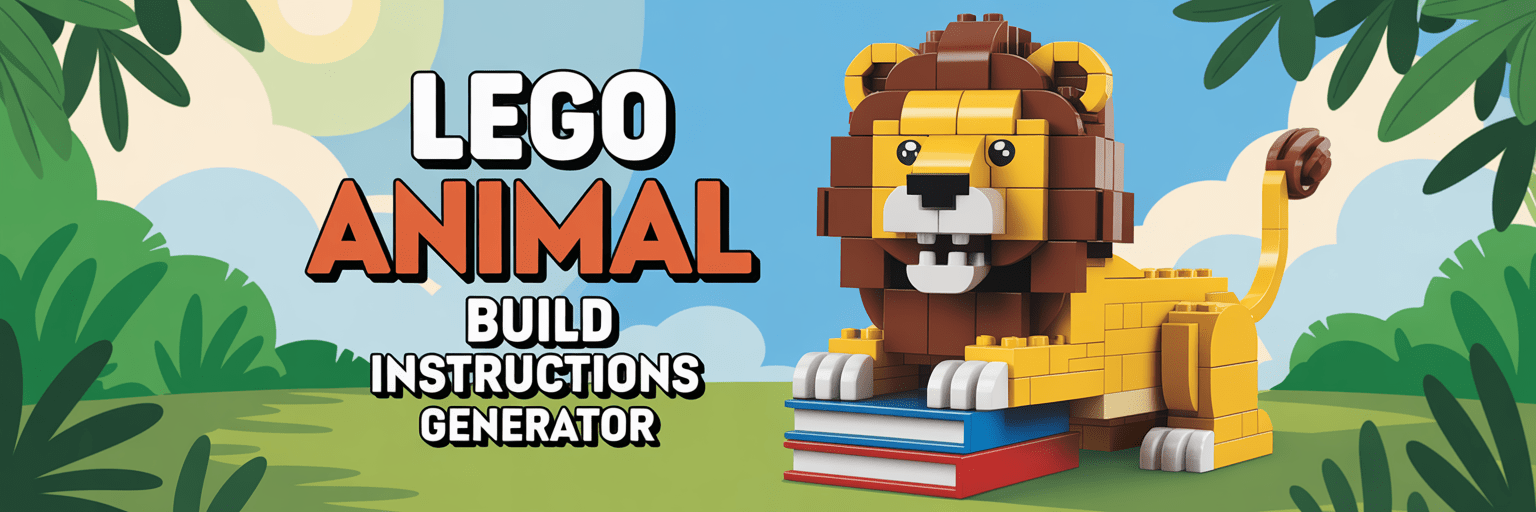
Lego Animal Build Plans Generator
Design brick-built animals with solid anatomy, poseable parts, and instruction-ready steps.
Tip: Some menus allow multiple selections. On desktop use Ctrl/Cmd-click; on mobile, tap to add/tap again to remove.
Want to use this generator offline?
Get the downloadable package (instructions & assets):
LEGO Animal Build Ideas: Brick-Built Wildlife, Pets, Ocean Creatures, Birds, Dinosaurs, and Instruction-Ready Animal Models
Animal builds are one of the most popular categories for LEGO fans because they combine creativity, anatomy, pose design, color planning, and display value in a single project. A strong LEGO animal build can be cute, realistic, educational, collectible, or fully poseable depending on the goal. Whether you want a brick-built cat, a LEGO dog model, a LEGO bird display, a LEGO dinosaur build, or a LEGO ocean animal creation, this page is designed to help you generate clear animal build plans and explore a wide range of project ideas.
Many builders search for phrases like LEGO animal build instructions, brick-built animal ideas, LEGO wildlife models, LEGO pet build plans, LEGO zoo animal projects, and LEGO animal MOC ideas. This page supports those searches by pairing a detailed animal build generator with a keyword-rich SEO article that helps search engines understand the page topic while giving visitors inspiration and practical building direction.
Why LEGO Animal Builds Are So Popular
A LEGO animal model appeals to a wide audience because animals are instantly recognizable and emotionally engaging. Some builders prefer realistic wildlife displays, while others want playful pets, classroom builds, or fantasy creatures. This broad appeal makes the topic especially valuable for search traffic, since it covers many keyword clusters such as LEGO safari animals, LEGO farm animal builds, LEGO bird models, LEGO reptile creations, LEGO sea life projects, and LEGO mythical creature builds.
Animal builds also work in many sizes and styles. A builder can create a compact desk pet, a minifig-scale companion, a museum-style display animal, a classroom anatomy model, or a large shelf centerpiece. That flexibility helps this page target both broad and long-tail searches while staying focused on the main topic of LEGO animal build plans.
Popular Types of LEGO Animal Builds
Some of the most popular searches in this niche center around familiar animals. Visitors often look for LEGO cat build, LEGO dog instructions, LEGO horse model, LEGO owl build, LEGO penguin project, LEGO shark model, and LEGO turtle build ideas. These animals are popular because they have strong silhouettes, recognizable colors, and clear display value.
Wildlife categories are also important for search visibility. Terms such as LEGO elephant build, LEGO giraffe model, LEGO bear display, LEGO dolphin creation, LEGO eagle sculpture, and LEGO rainforest animal build help attract searchers looking for more specific projects. A page that supports many animal types has a better chance of drawing traffic from hobby builders, parents, teachers, and collectors.
Long-Tail Keyword Clusters This Page Can Target
This page naturally supports many long-tail keywords that can help improve search rankings. Examples include LEGO animal build plans, LEGO animal build instructions, brick-built animal models, LEGO wildlife MOC ideas, LEGO pet build generator, LEGO animal instruction PDF, LEGO animal habitat base ideas, LEGO articulated animal design, LEGO zoo animal project, and LEGO animal model for kids.
Additional keyword clusters include LEGO bird build with wings, LEGO fish and ocean life model, LEGO reptile display build, LEGO dinosaur skeleton model, LEGO animal poseable joints, LEGO animal anatomy model, LEGO classroom animal project, LEGO museum animal display, LEGO printable animal instructions, and LEGO BrickLink animal parts list.
How to Plan a Better LEGO Animal Build
The best LEGO animal builds usually begin with silhouette and proportion. Before focusing on small details, builders should decide whether the model is realistic, stylized, compact, minifig-scale, or fully articulated. Once the scale is clear, it becomes easier to plan the head shape, body proportions, joint type, leg or wing structure, tail support, and color blocking.
This is where a build generator becomes especially useful. Instead of starting from a blank page, builders can choose animal category, species, scale, pose, anatomy focus, texture technique, colorway, habitat base, audience, instruction type, and optional extras. That structure helps visitors searching for custom LEGO animal build ideas, poseable LEGO animal plans, and animal model prompt generator find exactly what they need.
Pose, Articulation, and Movement Matter
A big part of animal design is deciding how the model should move or be displayed. Searchers often want more than a static model, which is why phrases like LEGO animal articulation, poseable LEGO bird, LEGO opening jaw animal, LEGO flapping wings model, LEGO neck articulation build, and LEGO tail movement design are so useful.
A neutral standing pose works well for simple instructions and sturdy classroom builds. A walking gait or running pose can make a wildlife model feel more dynamic. Flying birds often look best on a stand with wings spread, while sharks, dolphins, and other aquatic models may benefit from a swimming pose and wave-style display base. Pose-based language helps this page reach more specific search queries while making the article more helpful to builders.
Anatomy and Surface Detail Improve Build Quality
Builders searching for animal projects often care about form and realism. That makes search phrases like LEGO animal anatomy, LEGO jaw shaping, LEGO fur texture techniques, LEGO feather layering, LEGO scales texture build, and LEGO body core support especially relevant. Strong animal models usually balance three goals: recognizable anatomy, stable structure, and smart surface treatment.
For example, brick-built fur can be suggested with studs-out layering or curved slopes, feathers can be represented with cheese slopes and stacked plates, and marine animals often benefit from smooth SNOT shaping. Those technique descriptions not only help readers, they also strengthen the page’s relevance for specialized search traffic.
Colorways and Animal Pattern Ideas
Color is a major part of any successful animal build. Naturalistic patterns are popular for wildlife fans, while brighter teaching colors work well for classrooms and kids. This opens the page to many keyword variations such as LEGO tiger stripes, LEGO leopard spots, LEGO arctic animal colors, LEGO jungle animal palette, LEGO ocean counter-shading, and LEGO monochrome animal sculpture.
Builders may want realistic color blocking for display pieces, bold contrast for shelf art, or simplified educational palettes that make anatomy easier to understand. Covering these options helps the page rank for more descriptive searches and makes the content more useful across different skill levels and audiences.
Habitat Bases Make Animal Models More Searchable
A good habitat base can turn a simple model into a full display. Searchers often look for LEGO animal habitat base, rock outcrop display stand, forest floor vignette, coral reef animal base, arctic ice scene, and museum plinth for animal model. These terms add another layer of search relevance to the page.
A habitat base also helps tell a story. A perched owl feels stronger on a branch, a penguin looks better on an icy base, a tiger gains context on a forest floor, and an ocean animal stands out over coral or wave elements. Habitat details are especially helpful for display-oriented search terms and image-focused traffic.
Who This Type of Page Helps
One of the biggest SEO strengths of a LEGO animal build page is that it serves multiple audiences. Children and families may want easy, sturdy pet or farm animal builds. Teachers may want anatomy models, classroom worksheets, or museum-style displays. Advanced hobbyists may want poseable wildlife sculptures, detailed colorways, and printable instruction sequences with part callouts. This makes the page relevant for search phrases like LEGO animal project for kids, LEGO classroom animal build, LEGO museum animal model, LEGO family animal activity, and advanced LEGO wildlife display.
Because the topic crosses hobby, education, and display interests, it can attract more varied traffic than a narrow single-purpose page.
How the Generator Above Helps Animal Builders
The generator above helps visitors create structured animal build plans by guiding them through category, species, size, pose, anatomy priorities, surface style, color choices, habitat design, audience level, output format, and optional extras. That makes it useful for visitors searching for a LEGO animal prompt generator, animal MOC planning tool, LEGO build plan creator, or animal instruction design assistant.
Instead of guessing where to begin, users can build a more complete concept for a cat, dog, horse, owl, shark, turtle, dinosaur, or fantasy creature with clearer goals and more practical outputs. This improves user experience and helps reinforce the page topic for search engines at the same time.
Why This SEO Article Helps Search Rankings
Placing a detailed article below the generator and above the footer gives the page more topical depth, more indexable text, and more ways to match long-tail search queries. Instead of ranking only for the page title, the page can also begin matching related searches tied to pets, wildlife, birds, reptiles, dinosaurs, habitats, articulation, anatomy, classroom use, and printable instructions.
That is the main value of a strong SEO support section. It broadens the reach of the page without changing the generator itself, helping the page attract both search traffic and engaged builders looking for specific animal project ideas.
Start Designing Your LEGO Animal Build
Whether you want a realistic wildlife display, a cute desk pet, a minifig companion, a dinosaur model, an ocean creature, or a classroom-friendly animal project, the generator above can help you create a more organized build concept. Use it to experiment with anatomy, pose, texture, colorway, habitat base, and instruction style, then turn those ideas into a sturdy, fun, and display-ready LEGO animal model.