Level 1 — Snapshot
Level 2 — Builder Brief
Level 3 — Detailed Prompt
Level 4 — Press-Release
Included Specimen Data (for accuracy)
Curated highlights used to guide proportions and label text:
- SUE (FMNH PR 2081) — ~40 ft (12.3 m) long, ~13 ft hip height; ~90% complete.
- STAN — nearly complete T. rex; to be displayed at Natural History Museum Abu Dhabi.
- Tristan Otto — original T. rex in Europe; ~12 m long, ~4 m tall mount.
- Horridus — world-class complete Triceratops horridus at Melbourne Museum.
- Dippy — iconic Diplodocus carnegii cast, NHM London (replica lineage).
- Apatosaurus louisae — classic Carnegie mount (with historic head correction).
- Giraffatitan — tallest mounted dinosaur (~13.27 m) in Berlin.
- Apex — remarkably complete Stegosaurus at AMNH (current display).
- Máximo — Field Museum Patagotitan cast spanning 122 ft.
This page is a standalone, WordPress-safe generator. No external scripts.
Disclaimer: Some rendered images may show colors or finishes (chrome, metallic, etc.) that are not currently produced by LEGO. Substitution notes are included for real-world building.
LEGO Dinosaur Skeleton Build Ideas: Museum-Style Fossil Displays, Famous Dinosaur Specimens, and Real-Build Osteology Models
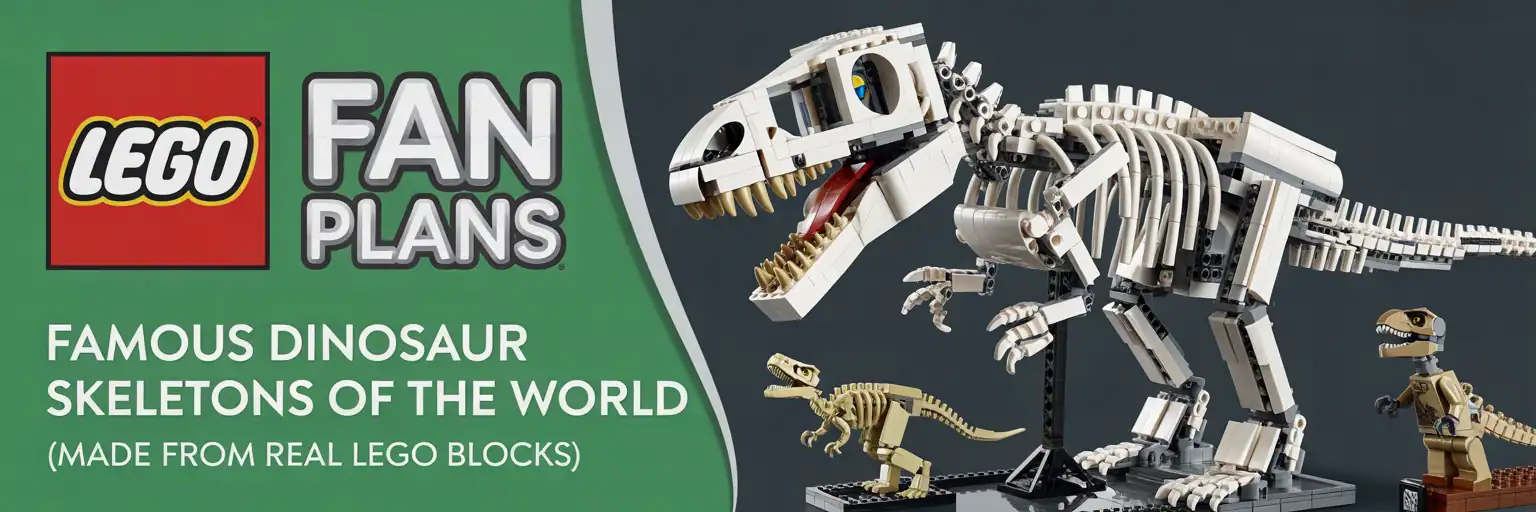
Dinosaur skeleton models are one of the most exciting ways to combine science, display design, and serious brick building into one project. A strong LEGO dinosaur skeleton build can look like a museum exhibit while still using practical, buildable structure methods. Whether you want a LEGO T. rex skeleton, a LEGO Triceratops fossil display, a LEGO Diplodocus museum model, or a brick-built dinosaur osteology project, this page is designed to help you create a display-ready model with clear planning, accurate proportions, and real-build structure.
Many visitors search for phrases such as LEGO dinosaur skeleton instructions, museum-style dinosaur LEGO build, famous fossil specimen model, LEGO dinosaur bones display, LEGO paleontology project, and brick-built dinosaur fossil plans. This page supports those searches by pairing the generator above with a detailed SEO article that gives search engines more context and gives builders more useful information about specimen choice, scale, rigging, display style, and build strategy.
Why LEGO Dinosaur Skeleton Displays Are So Popular
A LEGO fossil skeleton model stands out because it feels educational, collectible, and dramatic all at once. Builders get the satisfaction of creating something that looks like a real museum piece, while also solving interesting structure problems such as balance, articulation, vertebrae spacing, skull shaping, and hidden support methods. These projects appeal to dinosaur fans, museum lovers, teachers, students, and advanced LEGO builders who want something more detailed than a standard creature model.
Searchers are often looking for LEGO museum dinosaur display, dinosaur skeleton MOC ideas, brick-built fossil mount, LEGO paleontology display, and realistic dinosaur bone model. Because this topic sits at the intersection of science, display art, and advanced model building, it can attract highly engaged visitors.
Best Long-Tail Keywords for This Page
This page naturally supports long-tail search phrases such as LEGO dinosaur skeleton build plans, museum-style LEGO fossil instructions, LEGO T. rex skeleton model, LEGO Triceratops skeleton display, LEGO Diplodocus fossil build, LEGO dinosaur osteology project, brick-built dinosaur museum model, LEGO paleontology classroom display, real-build dinosaur skeleton MOC, and LEGO fossil mount generator.
Additional keyword clusters include LEGO dinosaur bone structure, LEGO vertebrae build techniques, LEGO skull fossil shaping, LEGO museum plinth display, LEGO specimen plaque build, LEGO dinosaur rigging support, LEGO osteology teaching model, LEGO dinosaur exhibit design, LEGO fossil display stand, and LEGO famous dinosaur specimen build.
Famous Dinosaur Specimens Builders Search For
One of the biggest SEO strengths of this page is that it connects to famous specimen names that many museum and dinosaur fans already know. Searchers may specifically look for a LEGO SUE T. rex, a LEGO STAN T. rex model, a LEGO Tristan Otto display, a LEGO Horridus Triceratops, a LEGO Dippy Diplodocus, a LEGO Giraffatitan skeleton, a LEGO Apex Stegosaurus, or a LEGO Patagotitan museum model.
These specimen names matter because they create strong keyword relevance beyond generic dinosaur searches. Someone searching for a specific famous fossil is more likely to spend time on a page that clearly supports that exact specimen and presents the model as an accurate, display-focused build.
T. rex Skeleton Builds and Museum Display Appeal
Tyrannosaurus rex remains one of the most searched dinosaur subjects in the world, so a page like this can benefit from keyword phrases such as LEGO T. rex fossil, LEGO T. rex museum skeleton, brick-built T. rex bones, LEGO dinosaur skull display, and LEGO predator skeleton model. Builders are often attracted to T. rex because the skull, rib cage, tail, and iconic stance create a powerful display presence.
A T. rex skeleton build can work well as a desk-scale display, a gallery-scale model, or a large hall-style showpiece. That range of scale options helps the page match many different search intents, from casual desktop builds to advanced exhibition-style projects.
Triceratops, Stegosaurus, and Other Distinctive Skeleton Models
Herbivorous dinosaurs offer a different but equally strong set of search opportunities. A LEGO Triceratops skeleton attracts builders who want horned skull features, a dramatic frill, and a compact but recognizable museum mount. A LEGO Stegosaurus fossil build appeals to users searching for plate-backed silhouettes, tail spikes, and more unusual prehistoric anatomy. These subjects are excellent for people who want a dinosaur display with strong visual identity.
Other high-value searches may include LEGO sauropod skeleton build, LEGO long-neck dinosaur display, LEGO Apatosaurus bones, LEGO Giraffatitan museum model, and LEGO Patagotitan fossil scene. By covering both carnivores and herbivores, the page becomes relevant to a much larger set of search terms.
Why Museum-Style Presentation Helps SEO and User Interest
People searching for skeleton builds often want more than just the bones themselves. They also want a complete display. That is why phrases like museum-style LEGO dinosaur display, LEGO dinosaur plinth, LEGO fossil exhibit stand, LEGO specimen information plaque, and LEGO educational dinosaur display are valuable keyword targets. A museum-style presentation adds seriousness, makes the build feel more collectible, and creates a stronger visual hook for search traffic.
A detailed display base can include a tile plinth, a didactic label, a parquet-style museum floor pattern, a naturalistic substrate, or a teaching panel. These details broaden the page’s search visibility while also helping builders create a more satisfying final result.
Scale, Rigging, and Structural Support Matter
Dinosaur skeleton builds are structurally demanding, which means many searchers care about engineering terms as much as appearance. This page can target searches such as LEGO dinosaur support stand, LEGO fossil rigging design, hidden clear stands for LEGO skeletons, LEGO skeletal display stability, and LEGO dinosaur balance and center of gravity. These are strong long-tail terms because they come from builders actively trying to solve a design problem.
Hidden clear stands, matte black armatures, or floor-base pylons can all be used to help support a fossil display. Mentioning these options helps the page match more advanced and practical search queries while also making the content more useful.
Bone Detail, Vertebrae, and Skull Shaping Keywords
Skeleton builders often search for detail-level guidance rather than only general project names. That makes phrases like LEGO vertebrae techniques, LEGO dinosaur skull shaping, LEGO fossil rib cage build, LEGO pelvis and shoulder girdle structure, and LEGO osteology detail model especially important. A good fossil model depends on repeated bone modules, careful scale transitions, and believable proportions from skull to tail.
Pages that mention vertebrae, limb bones, mandibles, frills, horns, plates, or tail spikes can capture more specialized traffic from users who are looking for exact anatomical solutions rather than broad inspiration.
Why This Topic Works for Education and Museums
A LEGO dinosaur skeleton build is not only a display piece. It is also a powerful educational model. Teachers, museums, homeschool users, and science clubs may search for LEGO paleontology classroom activity, LEGO dinosaur anatomy model, LEGO fossil learning display, LEGO museum education project, and brick-built dinosaur science exhibit. These educational uses expand the page’s reach and can bring in visitors who are not just hobbyists.
Because fossil mounts connect directly to anatomy, scale, and prehistoric life, this topic supports both creative and academic search intent, which is especially useful for long-term search performance.
How the Generator Above Helps Dinosaur Builders
The generator above helps users plan a museum-style fossil model by selecting a famous specimen, build scale, target part count, palette, support style, bone detail level, articulation approach, display base, and plaque format. That makes the page highly useful for visitors searching for a dinosaur skeleton build generator, LEGO fossil planning tool, custom museum skeleton prompt, or brick-built osteology design helper.
Rather than starting from a blank concept, users can organize the model into a cleaner project with defined goals, structural priorities, and display choices. That improves both user experience and search relevance.
Why This SEO Article Helps Search Rankings
Adding a detailed article below the generator and above the footer gives the page more crawlable text, stronger topical signals, and many more chances to rank for long-tail searches. Instead of relying only on the page title, the page can now match searches related to fossil mounts, famous dinosaur specimens, museum displays, osteology models, support rigging, skeleton anatomy, and exhibit presentation.
That added depth can help improve page authority for dinosaur and fossil-related searches while also making the page more informative and valuable to visitors.
Start Planning Your LEGO Dinosaur Skeleton Display
Whether you want a desk-scale T. rex skull display, a gallery-scale Triceratops skeleton, a long-neck sauropod exhibit, or a museum-style fossil mount with a plaque and base, this topic offers huge creative potential. Use the generator above to organize your specimen choice, structure, display method, and detail level, then turn those ideas into a more accurate, stable, and impressive LEGO dinosaur skeleton build.